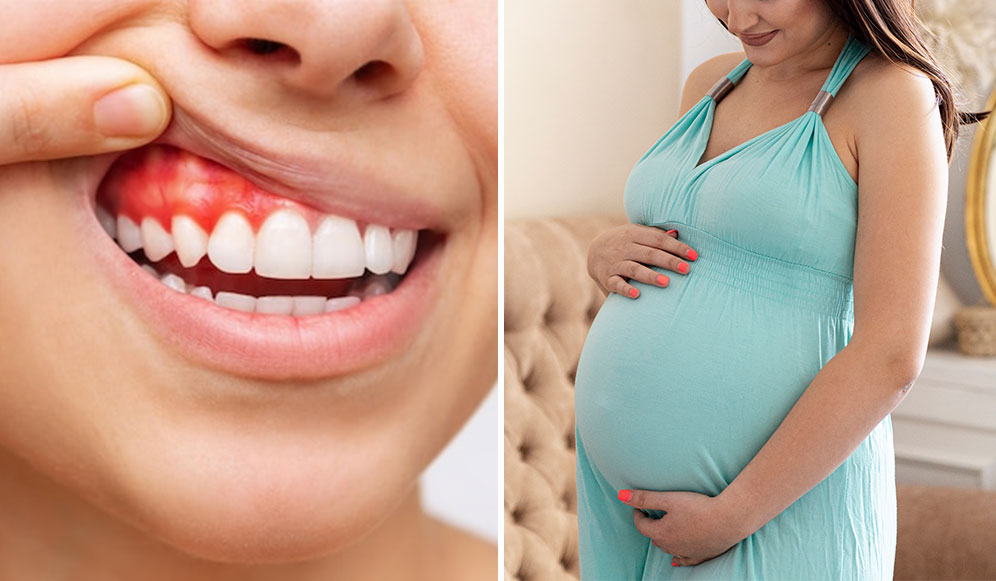
Bleeding gums affect 60-75% of pregnant women. While hormonal changes make this common, understanding the difference between manageable inflammation and serious complications could protect both you and your baby.
Pregnancy already has you dealing with enough: morning sickness, swollen ankles, and suddenly crying at dog food commercials.When your gums start acting up big time, you need more than a general dentist, you need a periodontal specialist who truly understands the unique challenges of pregnancy.Find out about cleaning and gum procedures near you.
Here’s what’s happening to your gums, why it matters, and how to protect both your smile and your baby during each trimester.
Let’s Find Out What’s Really Happening to Your Gums
If your gums have started bleeding since becoming pregnant, here’s the science: Progesterone and estrogen levels skyrocket to support your baby’s growth. *Too cute!* But these hormones increase blood flow to your gums and alter how your immune system responds to oral bacteria.
There’s another culprit too your body’s blood volume surges by up to 50% during pregnancy, turning gums into drama queens that bleed at the lightest brush. The result? Your gums become significantly more vulnerable to plaque buildup, and even your normal brushing routine can now trigger bleeding.This typically begins around the second or third month and can persist throughout pregnancy.
Why This Matters More Than You Think
Bleeding gums might seem minor compared to morning sickness, but the stakes are higher than most people realize. For your oral health, untreated gum inflammation can progress to gum recession, infection, and even tooth loss. More critically for your pregnancy. Research links severe gum disease to preterm birth, low birth weight, and fetal growth restriction. This isn’t just about comfortit’s about your baby’s wellbeing.
What to do for Pregnancy Dental Care
Before conception:
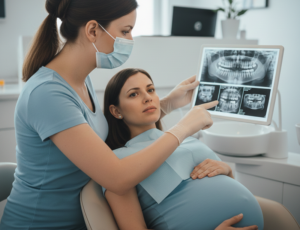
Get a comprehensive dental exam and address any existing issues. Establish a solid routine with twice-daily brushing using an ultra-soft brush, daily flossing, and antimicrobial rinses if recommended.
First trimester (Weeks 1-12):

Stick to urgent care only and inform your dentist about your pregnancy. If morning sickness has you vomiting, rinse your mouth afterward but wait 30 minutes before brushing-stomach acid weakens enamel, and immediate brushing causes additional damage.
Second trimester (Weeks 13-26):
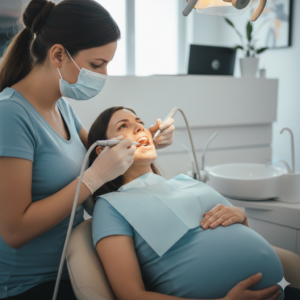
This is your treatment window. Schedule professional cleanings (potentially every three months), fillings, and scaling and root planing if needed. Local anesthetics with epinephrine are safe. If lying flat becomes uncomfortable, ask to be positioned on your left side.
Third trimester (Weeks 27-40):

Focus on gentle maintenance-soft brushing, careful flossing, and antibacterial rinses. Watch for pyogenic granulomas (unusual bumps that typically resolve after delivery), and save non-urgent procedures for after delivery.
Nutrition throughout:

Prioritize fiber-rich foods, omega-3 supplements, vitamins A, B, C, D, and E, probiotics, and xylitol gum while minimizing sugar intake.
Who can Make the Critical Difference
Dr. Irfana Thanwala at Dr. Irfana’s Dental Clinic in Jogeshwari West, Mumbai brings specialized expertise that matters when you’re protecting both your smile and your baby. As a Periodontist (MDS) and Implantologist with 12+ years of experience, Fellowship in Implantology from ISOI, and multiple international publications in Periodontology, she understands exactly how hormonal changes, blood volume increases, and immune system shifts affect your gums throughout each trimester.
Look, you’re growing a human-that’s already a superhero-level achievement. Let us brief your dental health so you can focus on the important stuff, like picking the perfect nursery paint colour and practicing your “mom voice.”
The clinic is recognized as the best clinic in Jogeshwari Mumbai for expecting mothers, offering gentle, technology-driven care with painless treatments designed specifically for women navigating pregnancy.
Your gums shouldn’t be adding to your pregnancy stress. Let’s get them back to behaving-because you’re creating life, and the least we can do is protect your smile while you do it.
Schedule Your Appointment Now | Call us for a personalized care plan tailored to your trimester.
P.S. Bring your pregnancy pillow to your appointment if it helps you get comfortable – we’ve seen it all, and we’re here for it!
FAQs
Are bleeding gums during pregnancy normal?
Mild bleeding and gum sensitivity are common in pregnancy because hormonal changes increase blood flow to your gums and make them react more strongly to plaque. However, frequent bleeding, swelling, or pain can signal pregnancy gingivitis or gum disease and should be checked by a dentist or periodontist.
Can gum disease in pregnancy affect my baby?
Yes, severe untreated gum disease has been linked in research to complications such as preterm birth, low birth weight, and restricted fetal growth. Keeping your gums healthy with professional cleanings and good home care during pregnancy helps reduce these risks and supports better outcomes for you and your baby.
When is the safest time for dental treatment during pregnancy?
The second trimester (weeks 13–26) is usually considered the most comfortable and safest window for planned dental treatments like cleanings, fillings, and deep cleaning procedures. In the first trimester, dentists usually limit care to urgent issues, while the third trimester focuses more on gentle maintenance and postponing non‑urgent procedures until after delivery.
What can I do at home if my gums bleed while I’m pregnant?
Use an ultra‑soft toothbrush, brush twice a day with fluoride toothpaste, and floss daily even if your gums bleed a little. If you have morning sickness, rinse after vomiting and wait about 30 minutes before brushing to protect your enamel, and ask your dentist if an antimicrobial mouthwash is suitable for you.
Does my diet really affect my gums during pregnancy?
Yes, nutrition plays a key role in gum health, especially during pregnancy when your body’s demands are higher. A diet rich in fibre, vitamins A, B, C, D, and E, omega‑3s, and probiotics while limiting sugary snacks helps support healthier gums and reduces plaque‑related inflammation.
Why should I see a periodontist instead of just a general dentist?
A periodontist is a gum specialist trained to diagnose and treat all stages of gum disease, which is particularly important when pregnancy hormones and increased blood volume make your gums more vulnerable. At Dr. Irfana’s Dental Clinic in Jogeshwari West, Mumbai, specialist pregnancy‑friendly protocols and technology‑driven, painless treatments are tailored to each trimester to keep both you and your baby safe.